
If you’re just starting out in Financial Planning & Analysis (FP&A) and looking for a free FPA course for beginners to build strong foundations without spending any money — you’re in luck. I’ve picked three top free resources to help you get started, along with two bonus tools to strengthen your learning and practical Excel skills.
1. Free Course: Nicolas Boucher’s “Free FP&A Course for Finance Professionals”

What it offers:
- Nicolas Boucher has created a free FP&A course targeting finance professionals who want to level up their FP&A knowledge. (Nicolas Boucher Online)
- The course boasts 60 lessons and covers major FP&A topics: role of FP&A in an organisation, financial analysis, budgeting & forecasting, KPIs, financial modelling, management reporting, storytelling & business-partnering, tools and career path. (Nicolas Boucher Online)
- The chapters are structured like this:
- Role of FP&A
- Financial Analysis
- Budgeting
- KPIs
- Financial Modelling
- Presentations & Storytelling
- Management Reporting
- Finance Business Partnering
- FP&A Tools
- Career in FP&A (Nicolas Boucher Online)
- The author states the aim: “help you become more knowledgeable about FP&A than 90% of your peers.” (Nicolas Boucher Online)
Why it’s good for beginners:
- Rich breadth: You get a wide overview of what FP&A is and how it works—not just Excel mechanics.
- Structured for learning: The 10-chapter layout lets you pick which topic you’re less familiar with.
- Good value: Free means low barrier; you can explore without an upfront cost and decide whether you want to go deeper later.
Tip for learners:
- Since this is globally oriented, some examples may assume US/European accounting or business context. When you study a lesson (say on budgeting or forecasting), try translating its concept into your local environment (for example, GAAP vs IFRS, your company’s planning cycle, etc.).
- Take notes: Especially on the “role of FP&A” and “business partnering” chapters—they help shift mindset away from pure accounting to value-adding analysis.
2. Free Course: Asif Masani’s Free FP&A Material via FP&A Professionals Institute

What we know:
- Asif Masani is a well-known FP&A professional, author, and educator focused on FP&A skills. (asifmasani.com)
- On his institute’s site he offers various free resources: for example, he mentions a free course kit “FP&A Interview Questions & Answers (Free Course Kit)”. (fpnaprofessionals.teachable.com)
- He has made publicly a “free FP&A course curriculum” – “32 free lessons to make you more knowledgeable than 90% of the finance professionals”. (LinkedIn)
Why this is useful for beginners:
- Focused on fundamentals and career-transition: Since many beginners may come from an accounting or audit background, Masani’s material helps bridge the gap (accounting → FP&A mindset).
- Free interview/context kit: Even if you don’t discount formal paid programmes, the free material helps you test your readiness and vocabulary of FP&A.
- Indian/Asian relevance: Given that Asif works and has experience in India/APAC, some of the context may resonate more (though you still should verify for your own company/sector).
Tip:
- Use the free kit as a “checkpoint”: After you finish Nicolas’s course (or before), use Asif’s free material to test your understanding. See if you can answer the interview-style questions or explain core FP&A functions.
- Build a glossary: Whenever you encounter a term (e.g., “Business Partnering”, “Rolling Forecast”, “KPI vs OKR”) make a note, search locally how it applies in your company or India context.
3. Free Course: PivotXL – “Automate Financial Reporting in Excel”
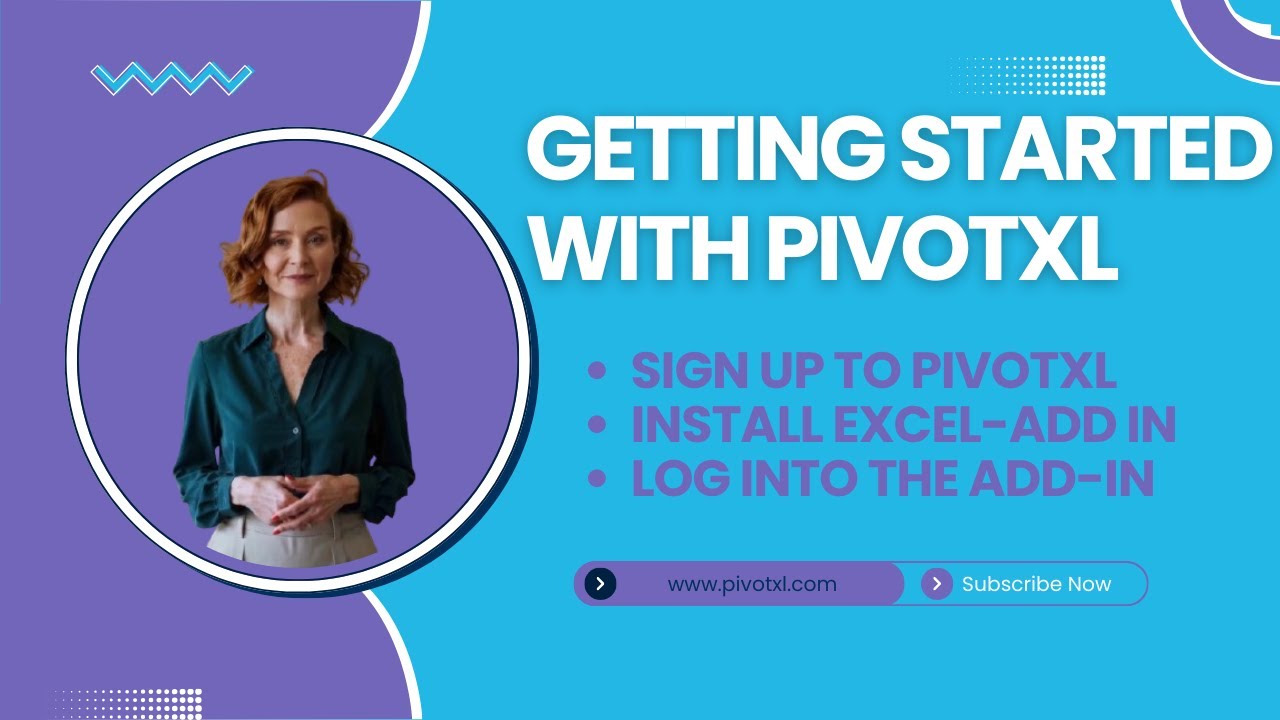
What it offers:
- PivotXL offers a freely accessible course titled “Automate Financial Reporting in Excel – PivotXL – Free Course”. (PivotXL)
- The course is aimed at FP&A professionals and CFO aspirants who want to master foundations of advanced financial reporting and analysis. (PivotXL)
- Key lessons include: setting up and structuring data (“data cube”), roll-ups & operators, mapping a trial balance into full financial statements (income statement, balance sheet) with automation. (PivotXL)
Why this stands out for beginners:
- Focus on Excel & reporting: For many FP&A roles, Excel is still king. Knowing how to structure data, build rollups, and create statements is foundational.
- Practical hands-on: Rather than just theory, you work through processes (connect data, set up dimensions, build statements) which amps your confidence.
- Complements the other two courses: While Nicolas & Asif cover strategy, role, mindset, this course gives you the tool-side muscle.
Tip:
- After doing the first two courses, allocate time (say 2-3 hours) to work through the tutorials. Use the example of your own company/industry if possible: e.g., pull your trial balance (or a mock version) and try mapping it.
- Make sure you grasp the concept of “data cube” and “rollups/Operators” because they reflect how modern FP&A is pushing beyond simple spreadsheets to structured data models.
Bonus Tools (Free & Practical)
While the three above are full courses, here are two free resources from PivotXL that act as practice labs and template libraries to reinforce your learning:
– Free Excel Practice Problems for Accounting & Finance
- PivotXL publishes a free download of Excel practice problems: covering functions like VLOOKUP, INDEX/MATCH, SUMIFS, PivotTables, NPV/IRR etc. (PivotXL)
- Great for honing your Excel skills which underpin FP&A work (reporting, model building, forecasting).
- Tip: Make a habit of doing one problem per day. Even 15-20 minutes daily adds up to big improvement.
– Free Excel Templates for Accounting & Finance
- PivotXL offers downloadable Excel templates: e.g., Trial Balance → Financial Statements, Business Budget (by Dept), Rolling Forecasts, WIP reporting. (PivotXL)
- Using templates helps you see how professionals set up models and reports. You can reverse-engineer them, break them, modify them—great learning.
- Tip: Grab one template (say the trial-balance to financial statements), load a sample data set (even a dummy one), and step through how it works. Then try tweaking: what happens if you change a dimension, add a scenario, adjust the mapping?
How to Get the Most from These Free Resources
Here’s a suggested learning plan to turn these materials into a self-paced mini-curriculum:
- Week 1–2: Orientation & Concept
- Do Nicolas Boucher’s “Role of FP&A” and “Financial Analysis” chapters.
- Simultaneously look at Asif Masani’s free material to familiarise with vocabulary and FP&A mindset.
- Week 3–4: Deepen & Apply
- Move into budgeting, forecasting, KPIs (via Nicolas) and business partnering (via Asif).
- Get your hands dirty: pick the PivotXL practice problems—focus on Excel functions you’re weak in.
- Week 5–6: Tool & Reporting Skills
- Use the PivotXL “Automate Financial Reporting” course to build a basic model: trial balance → statements.
- Download one template (from PivotXL) and try building/modifying it.
- Week 7 and beyond: Review & Build Portfolio
- Reflect: write a 1-page summary of what FP&A means, what value you bring, and what your next step is (based on what you learned).
- Consider building a small project: e.g., take an open-data set (or a public company’s data), build a simple budget + forecast + KPI dashboard in Excel.
- Use Asif’s interview kit free resources to evaluate yourself: can you explain variances, KPIs, forecasting methods, business partnering?
- Ongoing:
- Make mini-goals: e.g., every weekend do one Excel problem, revise one concept, explore one FP&A tool (Power BI, data-cube concept).
- Join FP&A communities (LinkedIn groups, Reddit r/FPandA) to see what others are doing. (One Redditor noted: “Fp&a Master class Asif Masani … they do a lot of free and sell things range from $5 to $5000” (Reddit) )
- Keep your local context in mind: even if the courses are global, your company/industry might have its own nuances (Indian tax/GAAP, billing cycles, seasonality etc.).
Final Thoughts
If you’re a beginner in FP&A, these resources give you zero-cost, high-value entry points:
- Nicolas Boucher’s course for the broad foundation,
- Asif Masani’s free kit for mindset and transition help,
- PivotXL’s course for hands-on Excel/reporting skills, plus the practice problems and templates for reinforcement.
By combining them, you’ll not only understand what FP&A is, but also how to do FP&A work (at least at a beginner/intermediate level). This is especially useful if you want to build your FP&A credentials before taking on a formal paid certification or job move.